
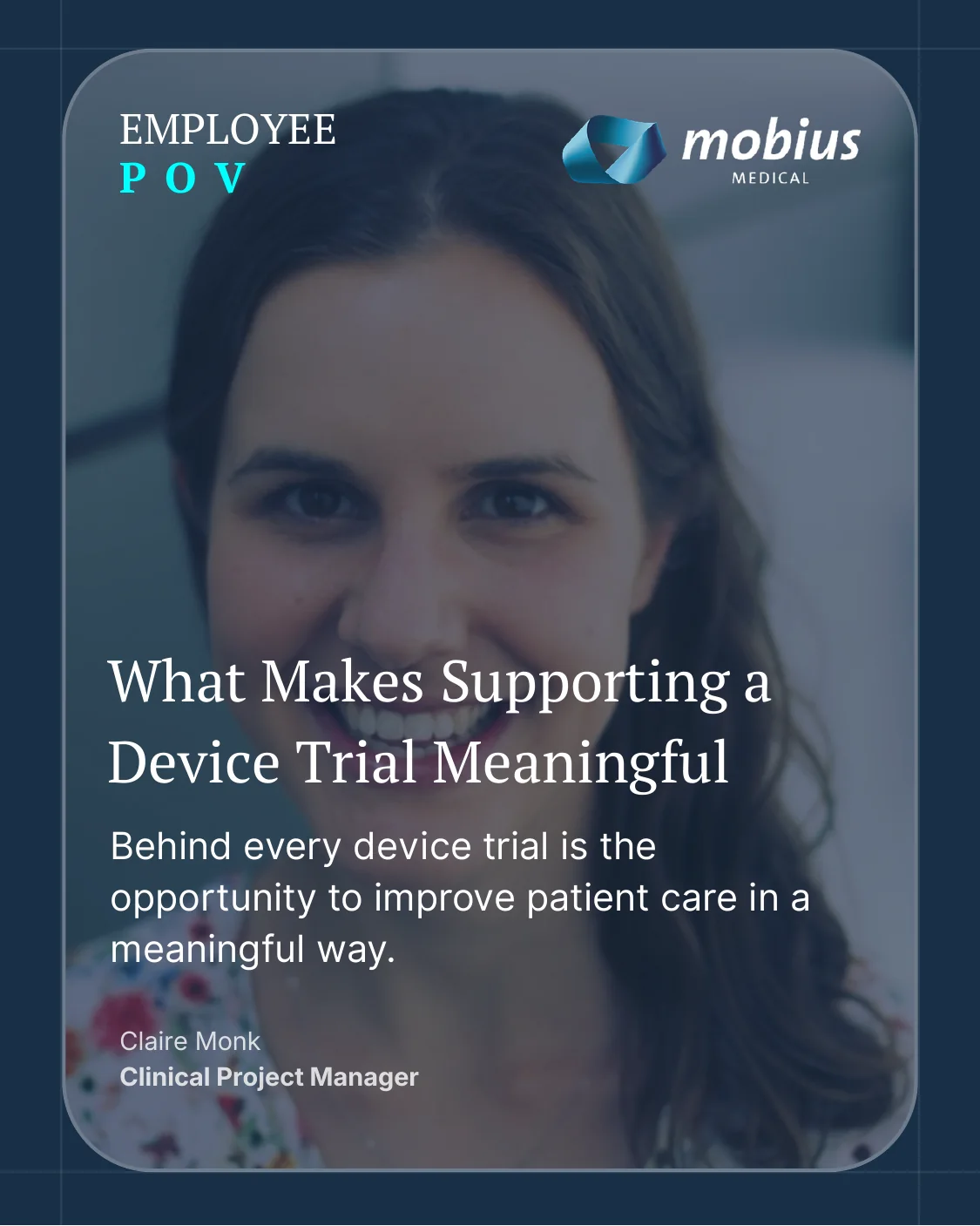
Claire Monk reflects on the purpose behind device-trial delivery and the importance of helping innovation become reliable clinical evidence.
When people think about clinical trials, they often picture data, regulations, timelines, and documentation. Those elements are certainly a major part of the work — especially in MedTech, where precision and compliance are critical.
But for me, the most rewarding part of supporting a device trial has always been knowing that the work contributes to something bigger than the study itself. Behind every protocol, site visit, and milestone is the potential to improve patient care in a meaningful way.
That perspective is what makes the work feel purposeful.
Seeing innovation become reality
One of the most rewarding aspects of device trials is watching innovation move from concept to clinical application. Many medical devices begin as ideas designed to solve a very specific challenge — improving a procedure, reducing risk, increasing accuracy, or enhancing a patient’s quality of life.
Clinical trials are the stage where those ideas are tested in real-world settings. Supporting that process means being part of the journey from innovation to evidence.
There’s something incredibly satisfying about contributing to work that may ultimately help healthcare professionals treat patients more effectively or improve outcomes for people who rely on these technologies every day. Even small contributions to a study can feel significant when viewed through that lens.
The people behind the process
While device trials are highly technical, what stands out most to me is the human side of the work. Every study involves collaboration between investigators, sponsors, coordinators, clinical teams, and participants who place trust in the process.
Supporting a trial often requires balancing moving timelines, problem-solving unexpected challenges, and ensuring every detail is handled carefully. It can be demanding, but it also creates a strong sense of teamwork.
Some of the most rewarding moments come from working alongside people who are all focused on the same goal: delivering a study that is safe, compliant, and meaningful. There’s a shared sense of responsibility that makes the work feel collaborative rather than transactional.
It’s also impossible to overlook the role of trial participants. Patients volunteer their time and place trust in research teams, often while managing their own health challenges. That level of commitment reinforces the importance of doing the work thoroughly and thoughtfully.
Finding purpose in the details
A lot of clinical trial work happens behind the scenes. Reviewing documentation, coordinating logistics, maintaining compliance, and managing timelines may not always seem visible from the outside, but those details are essential to the success of a study.
Over time, I’ve come to appreciate that even operational tasks have a direct connection to patient safety and study quality. Supporting a device trial means understanding that accuracy and consistency matter because the outcome affects real people.
That awareness brings a sense of purpose to the day-to-day work.
Why it continues to be rewarding
What continues to make device trials rewarding for me is the combination of innovation, collaboration, and impact. The work constantly evolves, presenting opportunities to learn, adapt, and contribute to technologies that may shape the future of healthcare.
At the same time, it’s a field grounded in responsibility. Supporting a device trial means helping ensure that new technologies are not only innovative, but also safe, effective, and ready for real-world use.
It’s not always the most visible work, but it’s meaningful work — and being part of that process is what makes it so rewarding.
Please reach out with any questions.
Claire Monk POV